Walk to the end of Bogert Trail Road on a Tuesday afternoon this month and you will find the gate to Andreas Canyon closed. Not construction, not a wildlife closure, nothing dramatic. Just a sign that says the trail is only open Friday through Sunday right now, and it has been that way since the first week of July.
If you live in Andreas Hills, this is not new information exactly, but it is probably fuzzier than you think. Most residents know the canyons "do something different in summer." Fewer know that two entirely separate systems are stacked on top of each other, one that repeats every year on the same calendar, and one that does not follow the calendar at all. Untangling them tells you something useful: your trailhead comes back online in about two weeks, and the closure that catches people off guard every spring is not the one you are dealing with right now.
Two closures, not one
The first system is seasonal and predictable. Indian Canyons, which includes the Andreas Canyon trail that borders this neighborhood, runs on daily hours from October 1 through July 4, then drops to Friday, Saturday and Sunday only from July 5 through September 30. That second window is where the neighborhood sits today. It is not a special event or a maintenance schedule. It is the same reduced-hours period that happens every summer, timed to when triple-digit afternoons make weekday hiking traffic thin anyway.
The second system is not seasonal at all. Once a year, the canyons close entirely for roughly a week for a tribal observance. In 2026 that closure ran from Sunday, May 24 through Sunday, May 31, which landed in late spring rather than the dead of summer. Tahquitz Canyon, a separate Agua Caliente property with its own waterfall, stayed open the whole time. The dates move from year to year, so the week that caught hikers by surprise in 2026 will land somewhere else in 2027.
The distinction matters if you plan your week around this trail, which if you live in Andreas Hills you probably do. The weekend-only stretch you are in now is not the same event as the closure that will show up next spring, and conflating them means you either miss a weekday hike you could have taken or show up on a weekend expecting access during the wrong week entirely. The canyons post current notices directly on their site, and given that both the observance dates and any flash closures shift, that is the page worth bookmarking rather than relying on memory from last year.
What changes on October 1
Two weeks from now, the trail your neighborhood was more or less built around goes back to being available every day of the week, 8 a.m. to 5 p.m., for the next nine months.
Here is the full-year picture:
| Period | Days Open | Hours |
|---|---|---|
| October 1 – July 4 | Daily | 8 a.m. – 5 p.m. |
| July 5 – September 30 | Friday, Saturday, Sunday only | 8 a.m. – 5 p.m. |
| One week annually (dates vary) | Closed entirely | Tribal observance |
A few practical notes worth having on hand once daily access resumes:
- Adult day-hike tickets run $12, with seniors 62 and older, students with ID, and children 6 to 12 at reduced rates, and free entry for active military with ID.
- Equestrian access is priced separately at $11, a detail that matters here specifically because the trail network was built for horseback use long before it was built for anyone's morning walk.
- Anyone under 18 needs to be with an adult to enter, which is easy to forget if you are used to letting a teenager head out solo.
None of this is a hardship during the summer stretch. It is a genuine shift in October, when the option to walk out your door on a Tuesday morning and be on the trail again returns for the first time since early July.
Why this neighborhood, specifically
Every hiking guide to Palm Springs treats Indian Canyons as a destination you drive to from downtown. Andreas Hills is one of the only places in the city where that framing does not apply. The neighborhood sits directly against the Indian Canyons boundary, close enough that longtime residents describe stepping onto the Andreas Canyon Trail from inside the community rather than driving five miles south to the public toll gate on South Palm Canyon Drive that everyone else uses.
That is a different relationship to the same trail. A visitor pays admission at 38500 S Palm Canyon Drive, parks in a designated lot, and picks a route from a map at the Trading Post. A resident treats the fan palm oasis and the ridge above Andreas Creek as an extension of the block. The rock mortars near the canyon entrance, evidence of Cahuilla food preparation that predates the neighborhood by centuries, are a few minutes' walk from driveways rather than a destination you plan a morning around.
The land itself has a specific backstory tied to this. Before Andreas Hills was developed, the site was open desert where former Palm Springs Mayor Frank Bogert led trail rides on horseback, long before any of the current streets existed. The neighborhood's main access road still carries his name. It is a small detail, but it explains why the trail feels like part of the property rather than a nearby amenity.
The architecture holds up its end
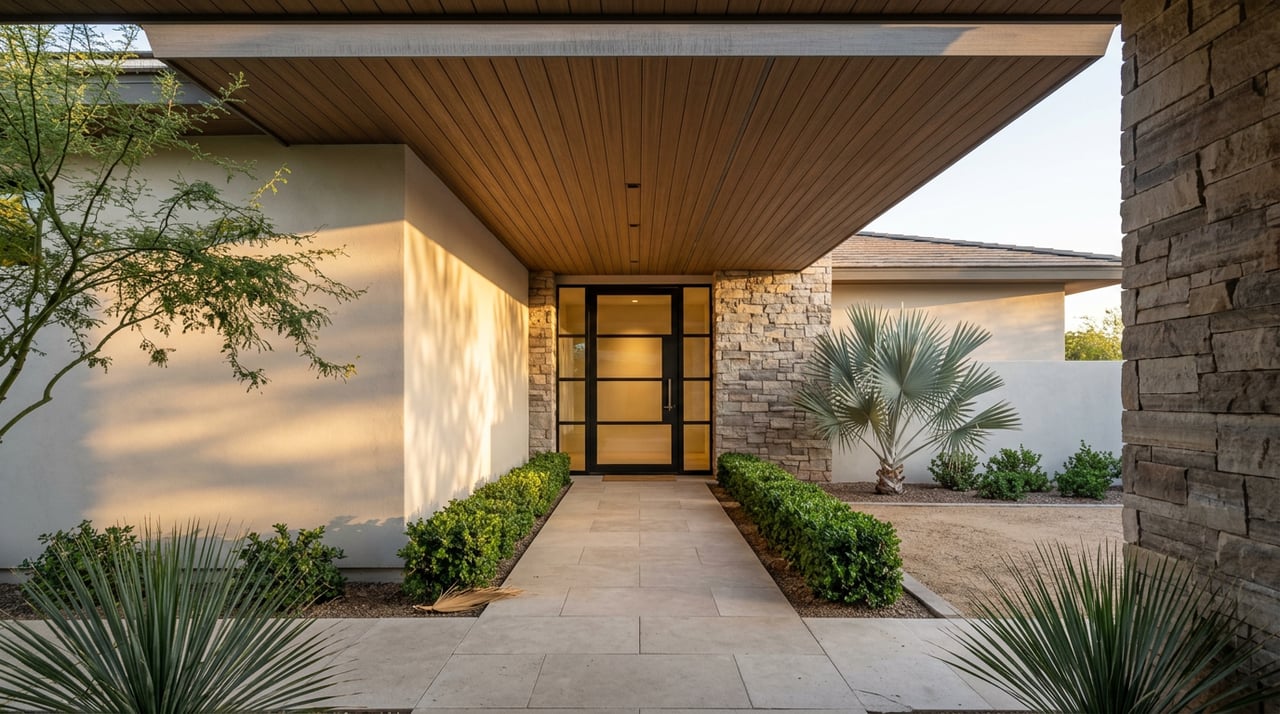
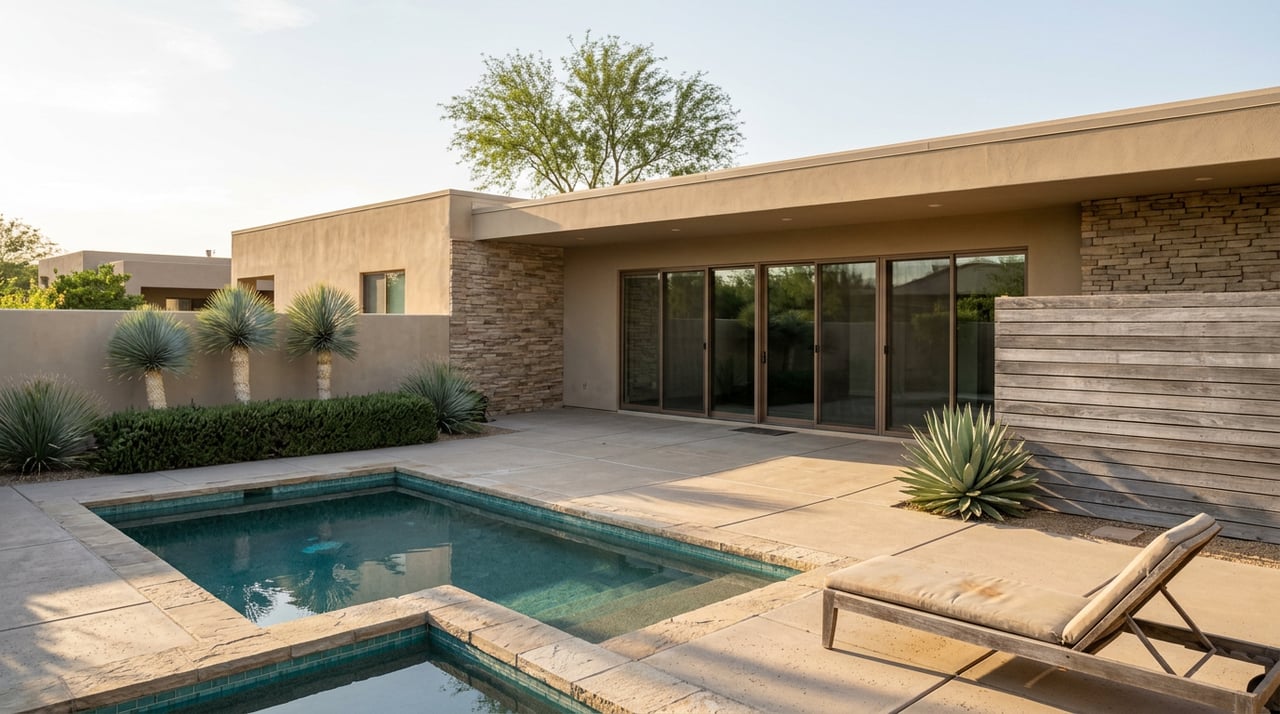
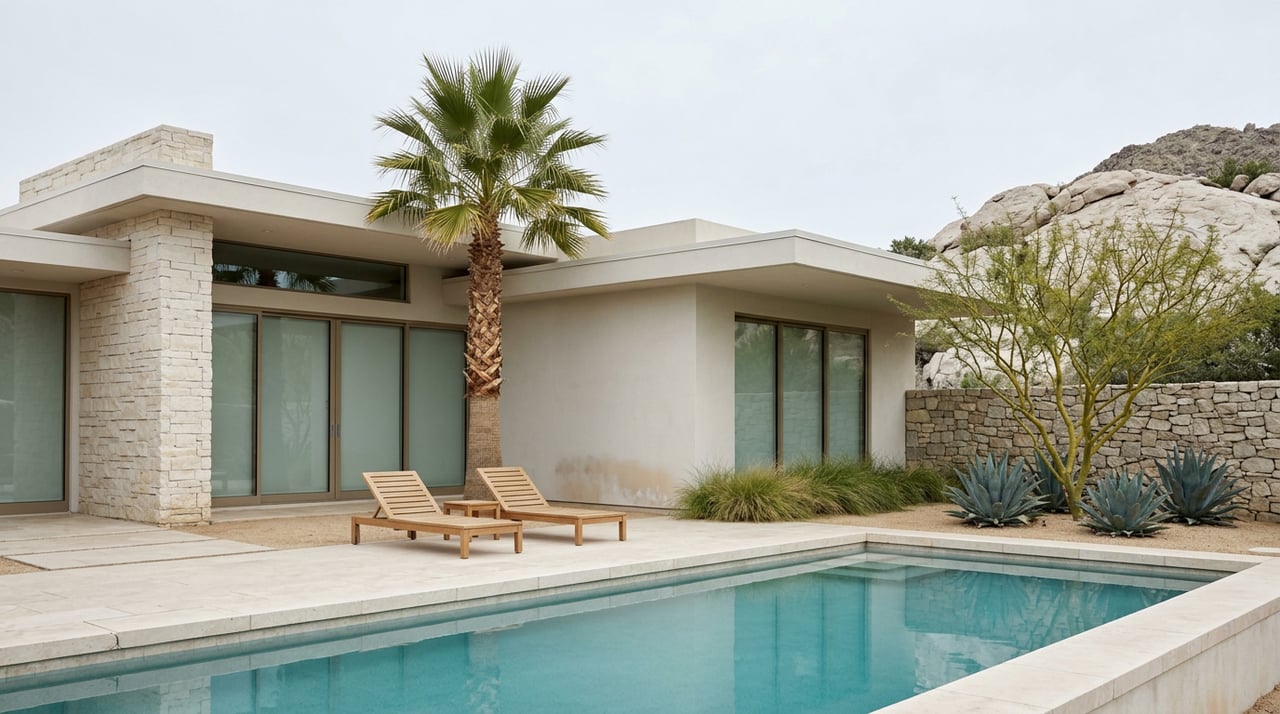
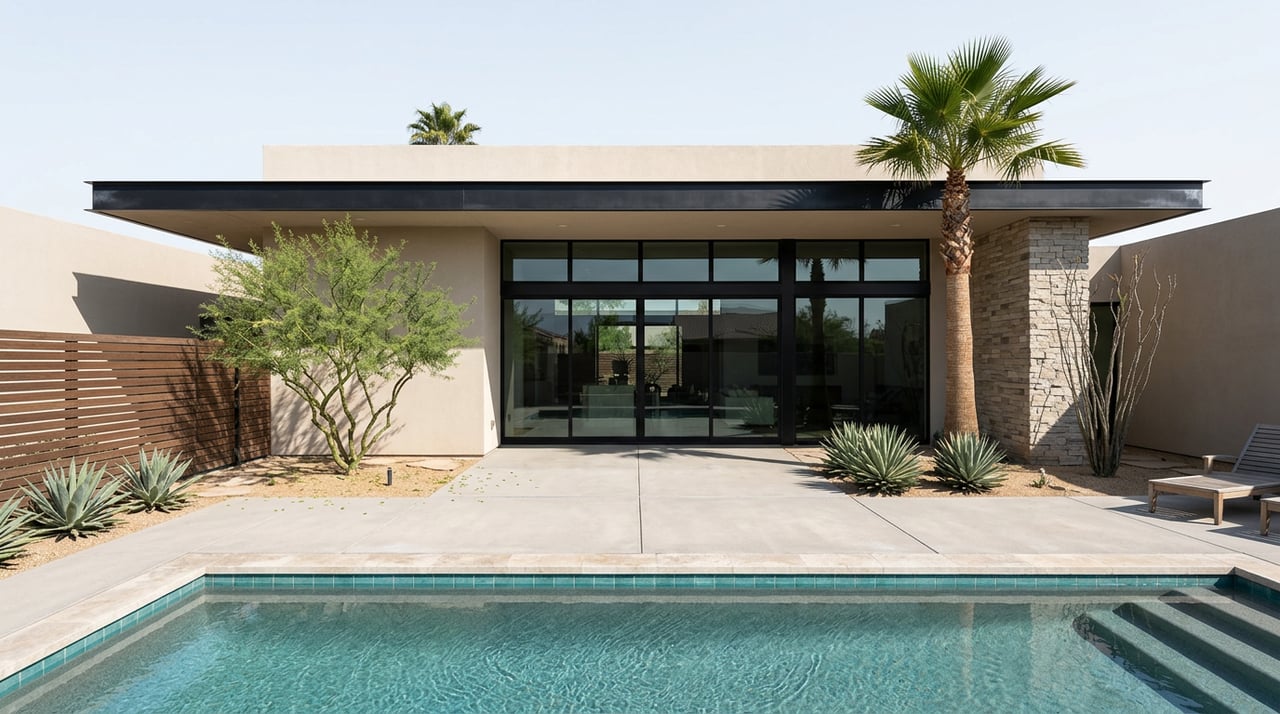
Andreas Hills is not just a well-placed address. Modernism Week's 2026 program included a home tour through Andreas Hills II, a complex of 26 condominiums designed by William Cody and built between 1970 and 1972. Cody envisioned the units as executive weekend retreats, with two and three bedroom floorplans ranging from 1,800 to 2,800 square feet, several of the larger units built as two-story designs. The six-acre property sits at the southern edge of the city behind Murray Peak, with broad greenbelts and a central pool that give the complex a low-density feel unusual for a neighborhood this close to a major hiking destination.
Getting featured on a Modernism Week tour is not a marketing claim, it is a curatorial one. The organization selects properties specifically because they represent the desert modern period at a level worth touring, which puts Andreas Hills II in the same conversation as the more widely known mid-century pockets of Palm Springs, just without the foot traffic those areas get during festival week.
The rest of the week
Trail access is the headline, but daily life here runs on a few other fixed points. Cahuilla Elementary, part of Palm Springs Unified School District, anchors the neighborhood for families with young kids. Smoke Tree Commons, a shopping center a short drive down South Palm Canyon Drive, covers the errand-running side of life with a grocery store, an Ace Hardware regulars mention by name, and a rotating set of restaurants, without requiring a trip into the downtown core.
Golfers have the Indian Canyons Golf Resort bordering the neighborhood directly, with 36 holes split across a South Course known for five par-5 holes and a North Course built around a Walt Disney fountain feature, an unusual bit of trivia for a desert golf course. For anyone who wants more ground than the canyon trails alone, Barona Mesa sits just past the neighborhood's edge with additional bike and walking paths connecting into the same foothill terrain.
The takeaway
If you live in Andreas Hills, the version of this neighborhood you have been experiencing since early July is the reduced one. Weekend-only trail hours, a single closed week back in May that most people have already forgotten about, and a wait for October. That wait is almost over. Mark October 1 as the day your trailhead goes back to full-time, and treat next spring's observance closure as its own separate event worth checking for rather than assuming it lines up with the summer schedule you just lived through.
Whether you are already a neighbor here or just curious about a corner of Palm Springs where the trail genuinely functions as part of the property, Sarah & James Pearce know this stretch of south Palm Springs from the ground up. If you are ever weighing a move into Andreas Hills or want a clearer read on what a home here is actually worth, reach out for a free home valuation and a conversation grounded in the neighborhood, not a generic market report.