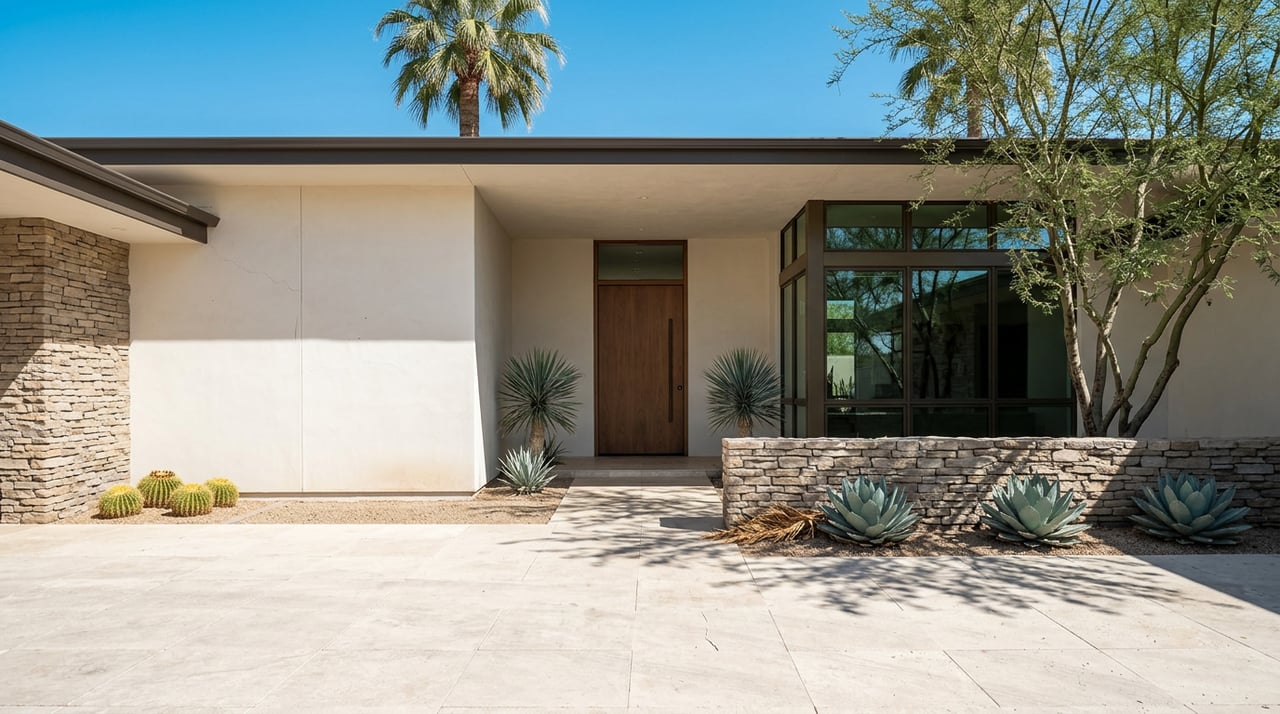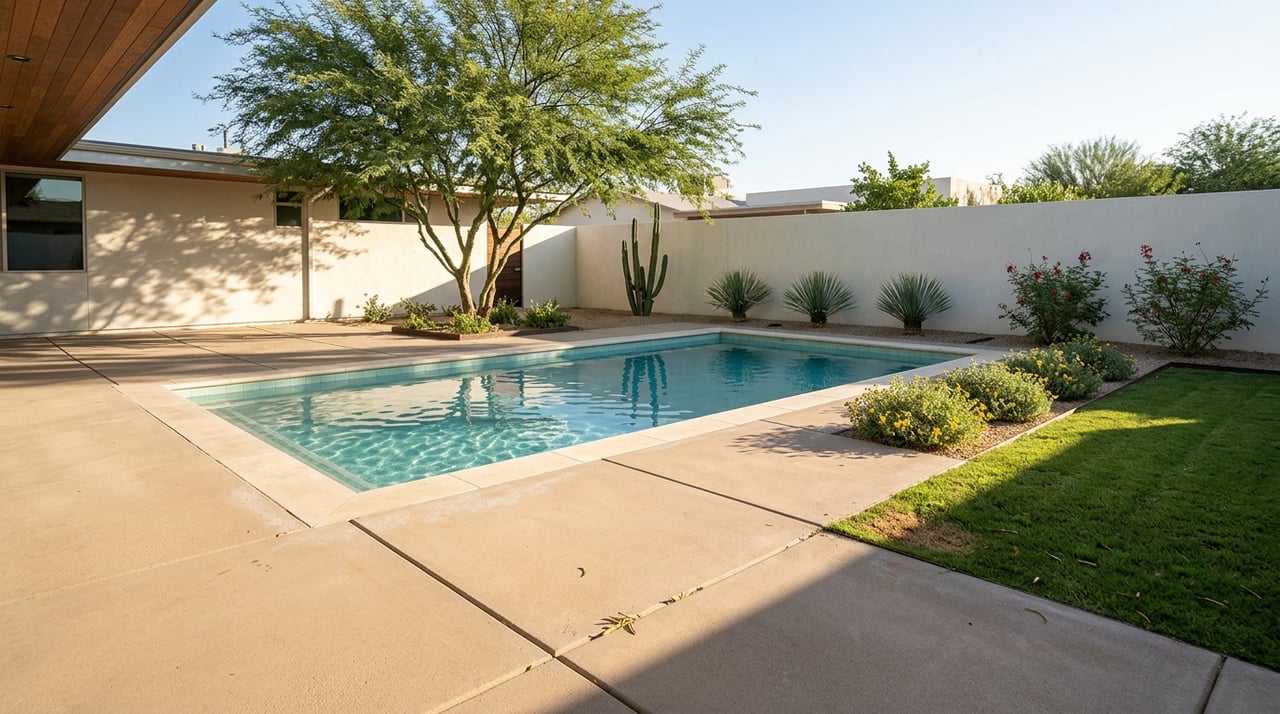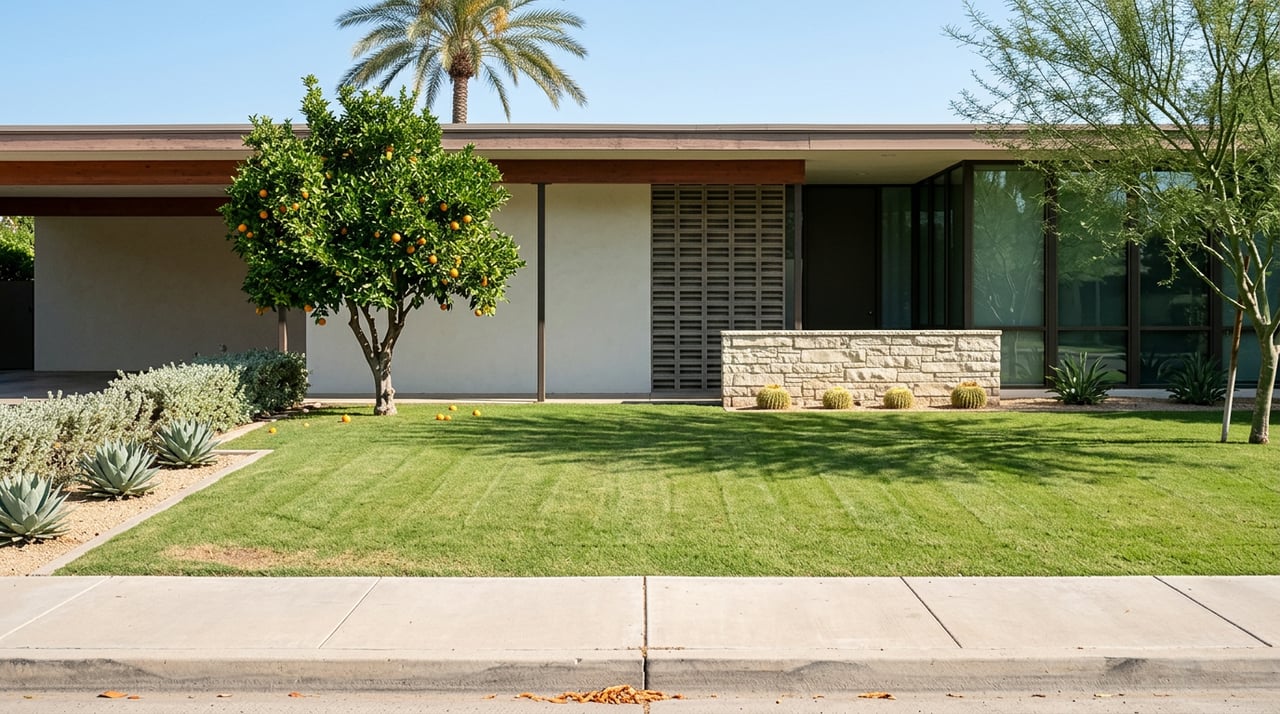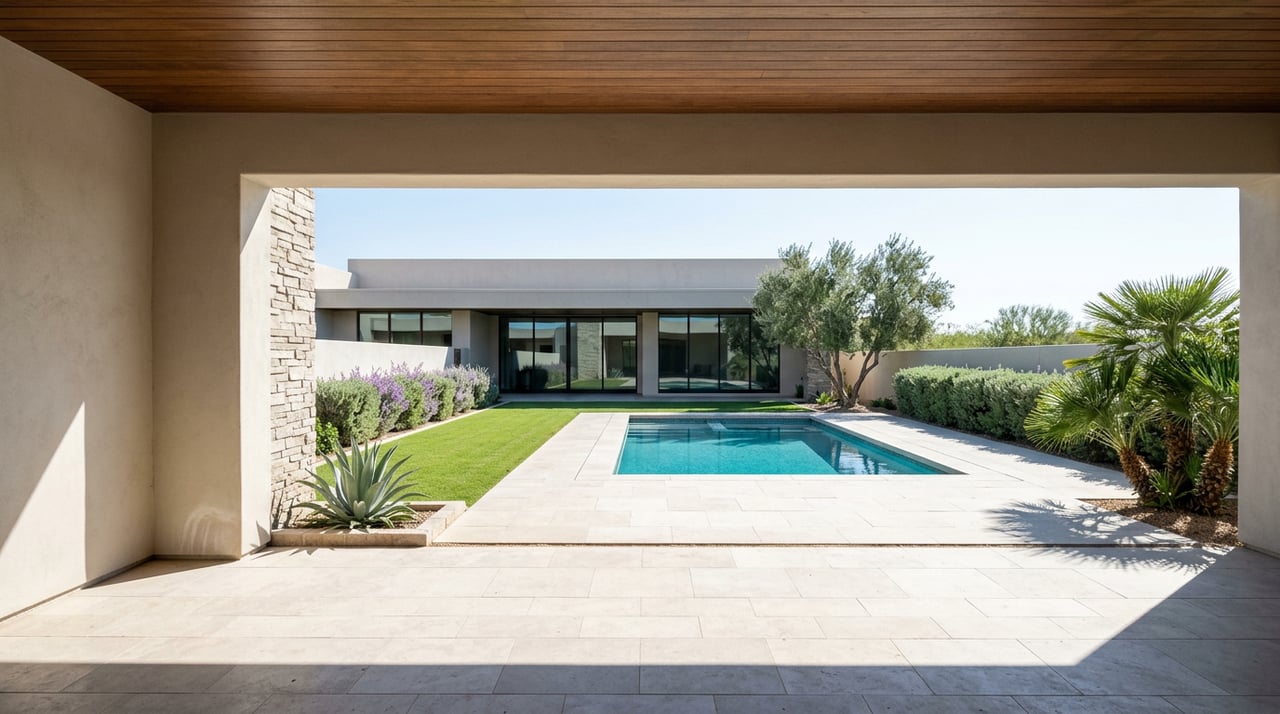
A listing inside Desert Horizons Country Club went up this summer with an unusual line in the remarks: the seller would cover the buyer's mandatory club initiation fee and a year of dues, through the end of August. Another Desert Horizons listing offered the same deal, framed as a limited-time incentive. Neither seller was cutting the asking price. Both were solving a different problem: at Desert Horizons, every buyer becomes a Social Member as a condition of closing, and that membership carries a $25,000 initiation fee, paid through escrow, non-refundable, whether or not the new owner ever picks up a golf club.
That single detail says more about how Indian Wells real estate actually works than any median price. The city recognizes six residential country club communities, and each one answers the question "does buying the house get me into the club" with a completely different rule. Get the rule wrong and you've misjudged the real cost of ownership by tens of thousands of dollars before you've paid a single property tax bill.
Six clubs, four different answers
Here's how ownership and membership actually connect across the communities most buyers compare:
| Club | Founded | Homes | Membership rule | What it means at the table |
|---|---|---|---|---|
| Eldorado Country Club | 1957 | 213 homes, 9 vacant lots, 54 member-owned cottages | Invitation only, not tied to real estate | You can own here and never be offered membership. The house and the club are two separate transactions with no guaranteed link between them. |
| The Vintage Club | 1979 | 513 homes | Ownership required first, then nomination, two sponsors, and club approval | Buying the property doesn't buy the club. If approved, expect a $100,000 equity requirement, a $300,000 initiation fee, and roughly $54,000 in annual dues. |
| Indian Wells Country Club | 1955-56 | About 1,000 homes across 28 separate HOAs | Fully optional | You can live behind the gates and skip the club entirely. Golf membership runs about $25,000 to join and roughly $1,470 a month; social and fitness membership is $2,000 to join with $365 monthly dues. |
| Desert Horizons | Private, member-owned since the early 1980s | About 510 homes | Mandatory Social Membership, billed through escrow | Every buyer pays a non-refundable $25,000 initiation at closing. Combined HOA and club dues run roughly $1,900 to $2,150 a month. Golf is a separate, optional add-on near $25,000 to join. |
| The Reserve | 1998 | Custom homes across 700 acres | Community-culture model, no tee-time golf | The Weiskopf and Morrish 21-hole course runs without tee times, which changes the daily rhythm of ownership as much as any fee does. |
| Toscana Country Club | Newer development | 631 homes and homesites | Capped and currently waitlisted for golf | Jack Nicklaus Signature courses, but golf membership is limited to 275 per course. Buying the home doesn't guarantee a golf slot on your timeline. |
Six clubs. Four fundamentally different relationships between the deed and the membership card. That is the variable buyers underestimate, and it's a bigger swing factor than square footage.
Severed completely: what Eldorado actually sells you
Eldorado, founded in 1957 on a compact 220 acres, is the clearest example of a full split between real estate and club life. Membership is by invitation only and is explicitly not connected to owning property there. The community includes 213 homes, nine vacant lots, and 54 member-owned cottages, a small number of which are available to rent seasonally with pool, tennis, and golf access included for guests. A buyer drawn to Eldorado for its legacy and architecture needs to treat the home purchase and the club application as entirely separate processes, with separate timelines and separate outcomes. One does not guarantee the other.
Ownership first, approval second: The Vintage Club's two-step
The Vintage Club flips that logic halfway. Property ownership inside the 700-plus-acre community is a prerequisite for membership, but ownership alone doesn't get you in. Buyers need two sponsors who are already members and formal club approval before the membership becomes real. If approved, the numbers are steep: a $100,000 equity requirement, a $300,000 initiation fee, and annual dues near $54,000, on top of the real estate itself. The club was ranked the top club in the Western United States by Platinum Clubs of America in 2024, third in the country and seventeenth in the world, which explains why buyers still queue for a process this expensive and this selective. It's worth treating the club application as its own closing timeline, not a formality that rides along with the deed transfer.
Mandatory and bundled: the Desert Horizons math
Desert Horizons takes a third approach that surprises buyers who assume "social membership" means optional. Every buyer becomes a Social Member as a term of purchase, and that $25,000 initiation fee gets paid through escrow at closing, non-refundable. It shows up folded into the monthly bill too: combined HOA and club dues run roughly $1,900 to $2,150 a month depending on the phase and sub-association, covering security, insurance, landscaping, and clubhouse access alongside the social membership itself. Golf remains genuinely optional on top of that, at roughly $25,000 to join and about $1,250 a month in dues. The seller credits showing up in Desert Horizons listings this summer aren't discounts on the house. They're sellers absorbing the one fee every buyer in that community has to pay regardless of whether they ever tee off, a sign that the mandatory membership fee, not the list price, is often the more negotiable number in this specific community.
Optional and legally splintered: Indian Wells Country Club
Founded in 1955 and 1956 with actor Desi Arnaz among its early backers, Indian Wells Country Club is the oldest name on this list and the one most likely to confuse buyers who assume "country club community" always means mandatory dues. Membership here is fully optional. You can buy inside the gates and never join. What catches people off guard instead is the governance: the roughly 1,000 homes in the community sit across 28 separate homeowners associations, not one master HOA. Two houses on the same street can carry different dues, different rules, and different reserve positions depending on which sub-association governs them. Before assuming a monthly number here, a buyer needs to identify the specific sub-HOA attached to the address, not the community brand name.
Waitlisted and capped: what Toscana's math actually limits
Toscana is the newest and glossiest of the six, built around two Jack Nicklaus Signature courses across 631 homes and homesites. It also has a hard ceiling: golf membership is capped at 275 members per course, and new golf memberships currently carry a waitlist. A buyer who assumes a newer club means faster access has it backwards. At Toscana, the scarcity isn't in the real estate inventory, it's in the club roster, and that waitlist position matters more to a golfer's timeline than the closing date on the house.
The listing price buys the house. The membership is a separate negotiation, with its own price, its own waitlist, and sometimes its own board vote.
What the current market is actually telling you
The headline numbers on Indian Wells depend heavily on which dataset you're reading, and that gap is itself a clue. As of February 2026, the median sale price stood near $2.0 million, up 13.5% year over year, with homes selling in a median of 62 days, down from 81 days the year before, even as only 16 homes closed that month compared to 33 a year earlier. As of August 2026, the median list price across all active Indian Wells inventory sat closer to $1.1 million. Neither number is wrong. One measures closed sales earlier in the year, weighted toward larger club-community estates. The other measures everything currently listed, including condos and non-club properties that pull the median down. That gap is exactly why a single "median home price in Indian Wells" tells you almost nothing about what you'll actually pay to live inside one specific gate.
The fewer closings and rising price point to tight inventory at the top of the market rather than a broad slowdown, which makes the Desert Horizons seller credits notable for what they are: a club-specific incentive tied to that one mandatory fee, not a citywide discount.
Questions worth asking before you write an offer
- Is club membership mandatory, optional, or fully separate from ownership at this specific address?
- If mandatory, is the initiation fee paid through escrow, and is it refundable under any circumstance?
- If optional or invitation-based, what is the current waitlist or sponsorship process, and how long has it been running?
- Does membership transfer with resale, or does a new owner have to reapply from scratch?
- Which of the sub-HOAs governs this exact property, and what do its reserves and recent assessment history look like?
- What is the total monthly carry, including HOA, club dues, food and beverage minimums, and cart or trail fees, not just the number on the listing sheet?
A short FAQ
Can I make my offer contingent on club membership approval? At clubs with a nomination or sponsorship process, such as The Vintage Club, buyers can and often should build a membership approval contingency into the purchase agreement rather than assuming approval will follow automatically.
Does an HOA fee include club dues? Not usually. Most HOA dues at Indian Wells Country Club and similar communities cover neighborhood maintenance and security, not golf or fitness privileges, which are billed separately by the club itself.
What happens if I don't want golf at all? It depends entirely on the club. Indian Wells Country Club and The Vintage Club offer social-only paths without golf. Desert Horizons still requires the Social Membership fee even for non-golfers, since that piece is mandatory regardless of golf participation.
Six clubs, six different sets of rules, and one house price that never tells the whole story. If you're comparing Indian Wells communities and want to know exactly which fee is mandatory, which one is waitlisted, and which one is negotiable before you write an offer, Sarah & James Pearce can walk the club-by-club math with you and help you get a clear picture of what a specific address will actually cost to own.