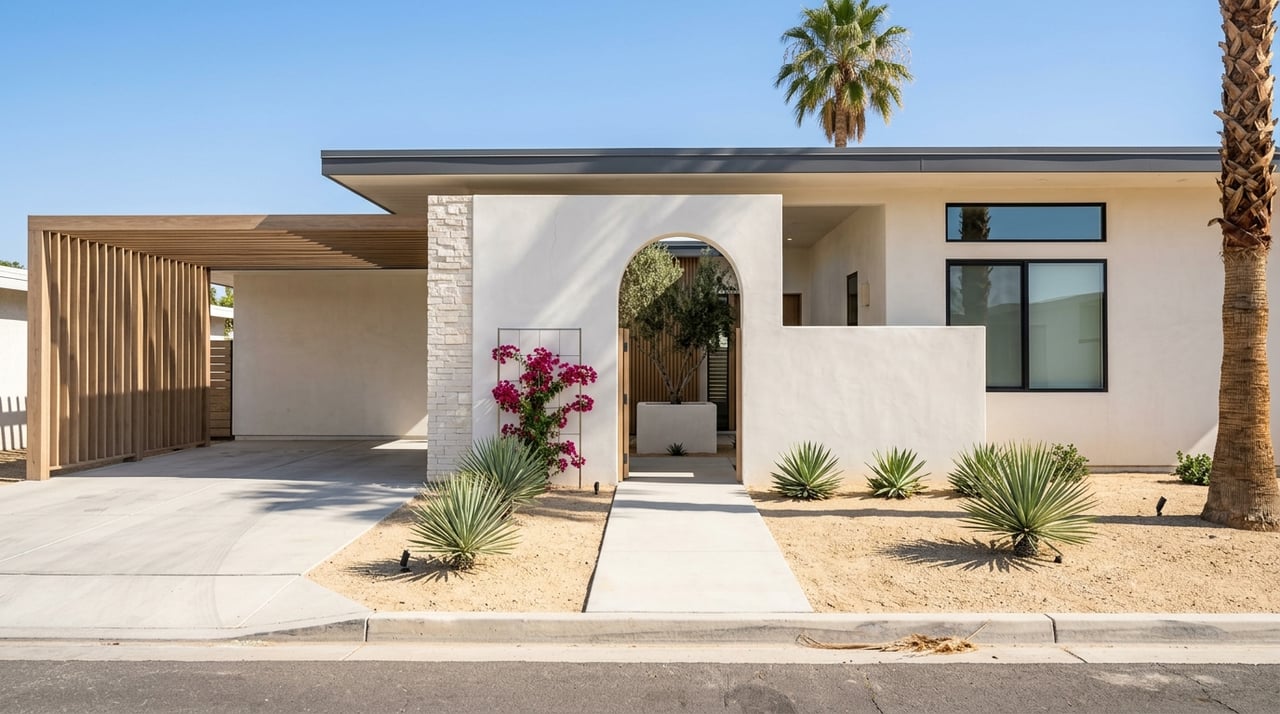
Looking for a Palm Springs neighborhood that feels central, character-rich, and distinctly local? Warm Sands stands out for exactly that reason. If you want a close-in location with a layered architectural story and a mix of homes, small hotels, condos, and residential pockets, this neighborhood deserves a closer look. Let’s dive in.
Where Warm Sands Sits in Palm Springs
Warm Sands is one of Palm Springs’ officially recognized neighborhoods, with city-installed signage and representation through the Office of Neighborhoods. Its commonly cited boundaries are Ramon Road to the north, Sunny Dunes Road to the south, Sunrise Way to the east, and Indian Canyon Drive to the west.
That compact footprint gives Warm Sands a true central Palm Springs feel. A current neighborhood guide places it about one mile south of downtown, which helps explain why the area often appeals to buyers who want convenient access to the heart of the city without being far out on the edge.
Why the Location Feels So Convenient
One of Warm Sands’ biggest strengths is how close it is to downtown Palm Springs. The surrounding downtown area has seen continued revitalization, with hotels, shops, restaurants, public art, special events, and a Downtown Park all contributing to its role as a pedestrian-friendly civic and cultural center.
Because Warm Sands sits immediately south of that core, daily life can feel easy and connected. Depending on the block and your route, walkability can be a real advantage, especially closer to the neighborhood’s northern edge.
Current neighborhood guides also describe Warm Sands as fairly walkable and bikeable, with Palm Canyon Drive, Indian Canyons, Mesquite Golf Club, and Palm Springs International Airport all less than ten minutes away. The safest way to think about it is simple: Warm Sands is close-in and convenient, with accessibility that varies a bit from one street to the next.
Warm Sands Has a Layered History
Warm Sands is not a master-planned neighborhood with one look or one era. Its tract subdivision dates to 1937, and city historic-resource documentation notes surviving early tourist accommodations from the pre-World War II period.
That matters because Palm Springs has evolved over many decades, and not every early property type has remained intact. In Warm Sands, that history still shows up in the built environment, giving the neighborhood a sense of depth that many buyers find appealing.
The area’s small-hotel identity is also part of the story. Palm Springs’ 2040 Land Use Element specifically identifies smaller-scale boutique hotels in Warm Sands and calls for preserving that small-hotel character, which helps explain the neighborhood’s resort-meets-residential atmosphere.
Architecture in Warm Sands
If you appreciate Palm Springs design, Warm Sands offers variety. City historic documentation notes that interwar Palm Springs often used a simplified, rustic Spanish Colonial Revival style suited to the desert climate and lifestyle.
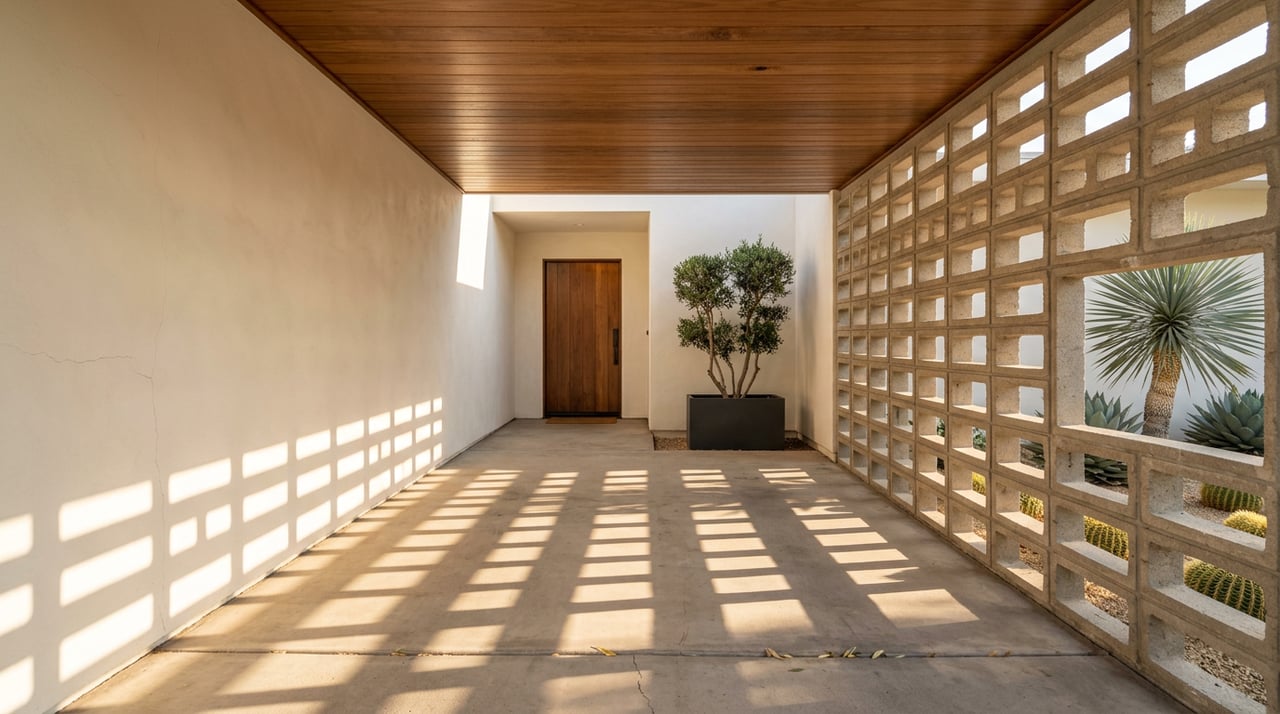
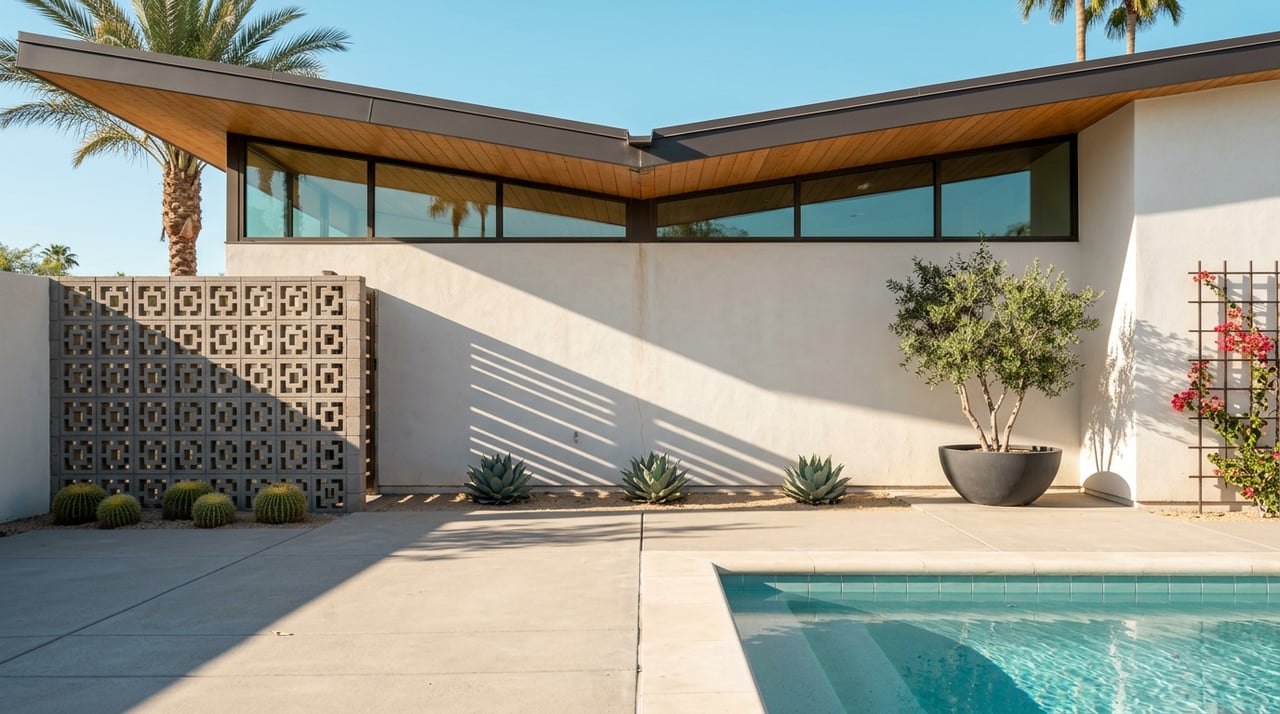
At the same time, Warm Sands also includes notable mid-century modern influence. A 1952 residence in the neighborhood by Albert Frey and Robson Chambers is highlighted by the city as an example of mid-century design, with a flat roof, wide overhanging eaves, indoor-outdoor integration, and an integrated carport.
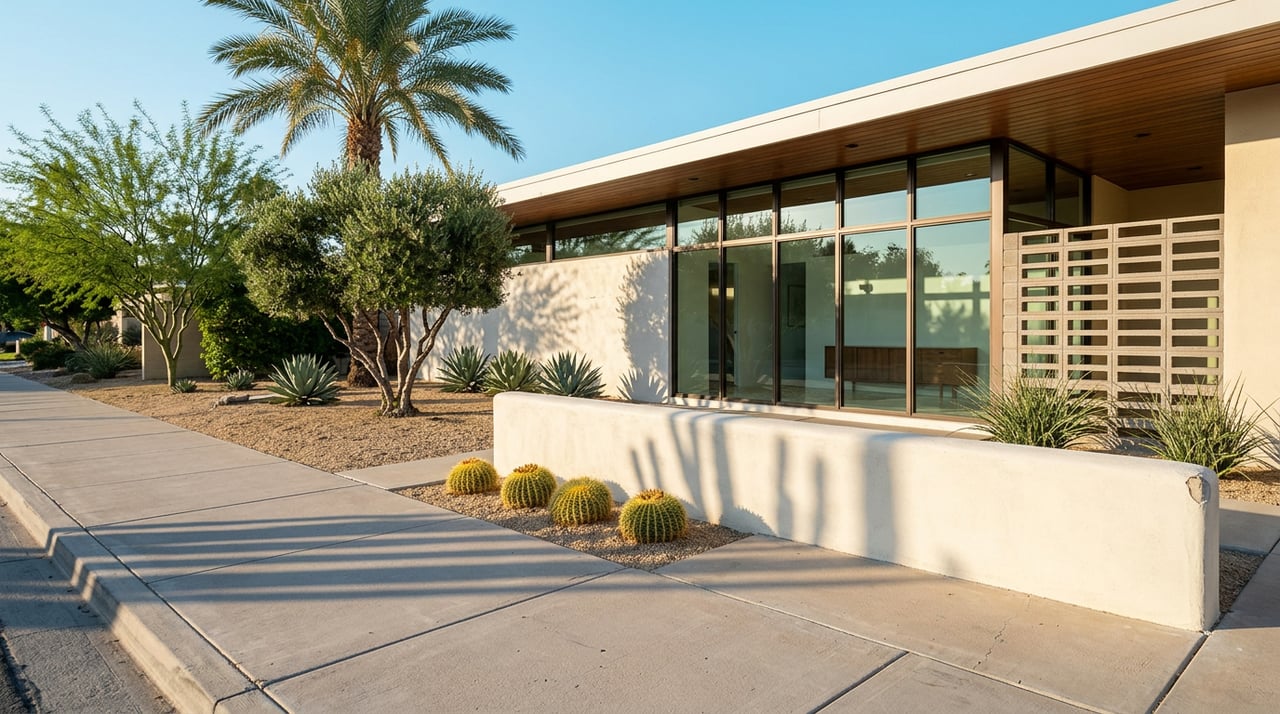
That mix is still reflected in the neighborhood today. A current neighborhood guide describes 1920s Spanish-style dwellings, 1950s mid-century homes, 1970s ranch styles, manufactured homes, bungalows, adobe-style houses, and contemporary residences all within Warm Sands.
Common Design Themes You May Notice
Even with the neighborhood’s variety, a few themes show up again and again:
- Low-rise massing
- Indoor-outdoor living
- Courtyards or patios
- Desert-friendly materials
- Architectural details shaped by climate and sun exposure
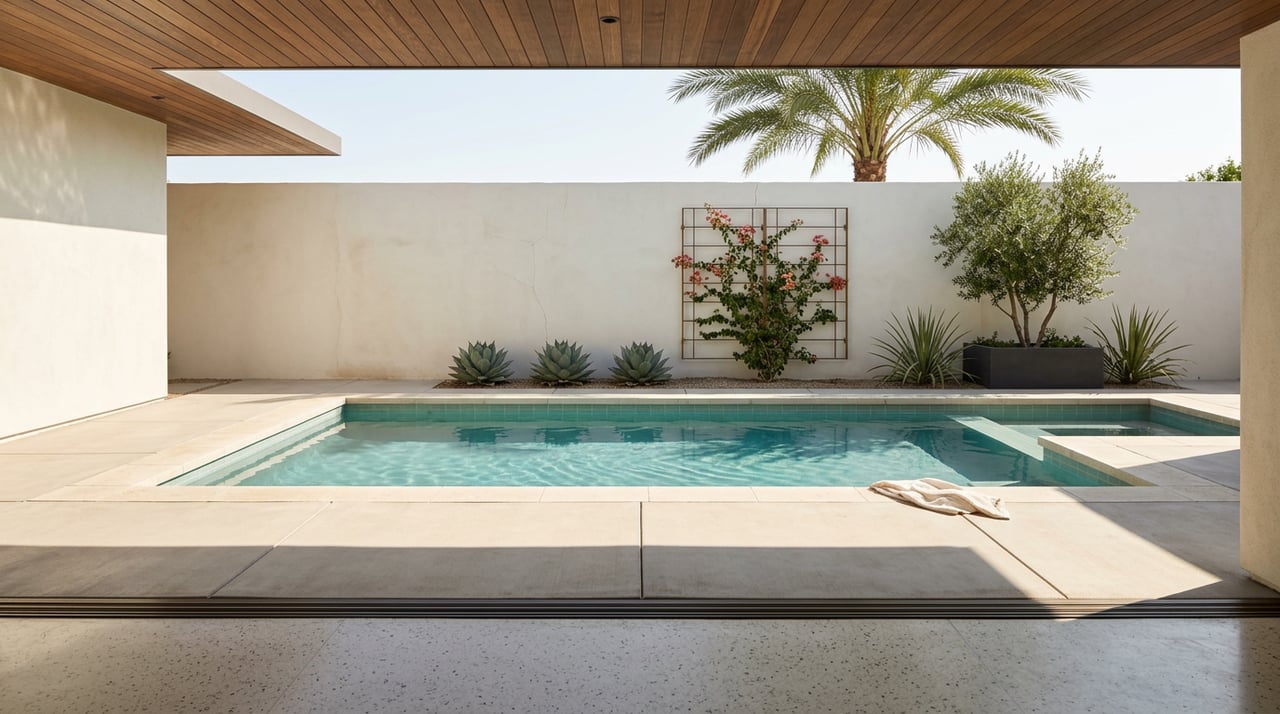
Palm Springs planning guidance reinforces those patterns. City policy highlights courtyards, reflective pools, decorative paving, and entry elements as desirable open-space features, and it calls for climate-appropriate materials such as stone, stucco, plaster, and metal.
What the Housing Mix Looks Like
Warm Sands is best understood as a mixed neighborhood. According to ONE-PS, it includes historic homes, a 250-space mobile-home park created in 1938, two condominium complexes, single-family homes, duplexes, larger rental complexes, resorts, and small businesses.
That range gives the neighborhood a different feel from areas made up mostly of one property type. Instead of a uniform subdivision, you get a more varied streetscape where building scale and site layout can change from block to block.
For buyers, that means it is worth paying close attention to the immediate surroundings of any property you are considering. In Warm Sands, the appeal often comes from the neighborhood’s mix, but that also means each micro-location can feel a little different.
What Buyers Should Expect
If you are exploring Warm Sands, you may come across:
- Detached homes from different eras
- Attached units such as condos
- Duplexes and multi-family buildings
- Resort and boutique hotel properties nearby
- Compact lots and varied parcel layouts
The key takeaway is that Warm Sands is varied and compact, not estate-driven. That can be a great fit if you value central location, architectural interest, and a neighborhood that feels more textured than uniform.
The Lifestyle: Residential With a Resort Edge
Warm Sands has a lifestyle identity that feels distinct within Palm Springs. The city’s planning documents directly acknowledge the neighborhood’s small-hotel character, and that gives the area a subtle resort-adjacent energy.
For some buyers, that translates into a Palm Springs experience that feels immersive and connected to the city’s hospitality history. For others, it means living in a neighborhood where residential properties and visitor-serving uses have long existed side by side.
Its proximity to downtown is a major part of that appeal. When you are close to restaurants, shops, public spaces, art, and events, the neighborhood can support a lock-and-leave second-home lifestyle as well as year-round living.
Who Warm Sands May Appeal To
Warm Sands can work well for several types of buyers, especially those who value location and character over a more suburban layout.
You may be drawn to Warm Sands if you want:
- A central Palm Springs address
- A neighborhood with architectural variety
- Easier access to downtown amenities
- A setting with both residential and boutique hospitality character
- A home type that differs from standard tract development
For second-home buyers, the close-in setting can be especially attractive. For local buyers, the neighborhood may offer a different kind of Palm Springs living experience, one grounded in history, design variety, and convenience.
Why Sellers Benefit From Warm Sands’ Identity
If you own in Warm Sands, the neighborhood’s identity can be a meaningful part of your home’s story. Buyers are often not just choosing square footage or bedroom count in Palm Springs. They are also choosing architecture, atmosphere, and how a location fits the lifestyle they want.
Warm Sands gives sellers several compelling talking points when supported by the property itself. Central location, proximity to downtown, layered housing stock, and the neighborhood’s boutique-hotel character can all help position a listing in a way that feels specific and memorable.
This is especially true when a home has design details that connect to the broader Palm Springs aesthetic, such as courtyards, patios, indoor-outdoor flow, or climate-responsive materials. In a market where presentation matters, neighborhood context can strengthen the full picture.
Final Thoughts on Living in Warm Sands
Warm Sands offers something many buyers are looking for in Palm Springs: a central location, a strong sense of place, and architecture that reflects the city’s evolution over time. It is close to downtown, rich in character, and shaped by a mix of homes, condos, rentals, resorts, and boutique hospitality uses.
If you want a neighborhood that feels connected, historic, and distinctly Palm Springs, Warm Sands is worth serious consideration. And if you already own here, understanding how buyers see that lifestyle can help you make smarter decisions about timing, presentation, and pricing.
If you’re thinking about buying or selling in Warm Sands or anywhere in Palm Springs, Sarah and James Luxury can help you navigate the neighborhood with local insight, concierge-level service, and a polished marketing approach.
FAQs
Where is Warm Sands located in Palm Springs?
- Warm Sands is generally bounded by Ramon Road to the north, Sunny Dunes Road to the south, Sunrise Way to the east, and Indian Canyon Drive to the west, placing it in a compact south-central area of Palm Springs.
What types of homes are found in Warm Sands?
- Warm Sands includes a mix of historic homes, single-family homes, condos, duplexes, larger rental buildings, a mobile-home park, resorts, and small businesses.
What architectural styles are common in Warm Sands?
- The neighborhood includes a range of styles, including Spanish-style dwellings, mid-century homes, ranch-style homes, bungalows, adobe-style houses, manufactured homes, and contemporary residences.
Is Warm Sands close to downtown Palm Springs?
- Yes. Warm Sands is about one mile south of downtown Palm Springs, and its close-in location is one of the neighborhood’s defining advantages.
What is the lifestyle like in Warm Sands?
- Warm Sands blends residential living with a boutique-hotel character, creating a central, resort-adjacent feel with convenient access to downtown amenities and events.
Is Warm Sands a walkable neighborhood in Palm Springs?
- Warm Sands is often described as fairly walkable and bikeable, though the experience can vary by block and route, with walkability generally strongest nearer the northern edge of the neighborhood.