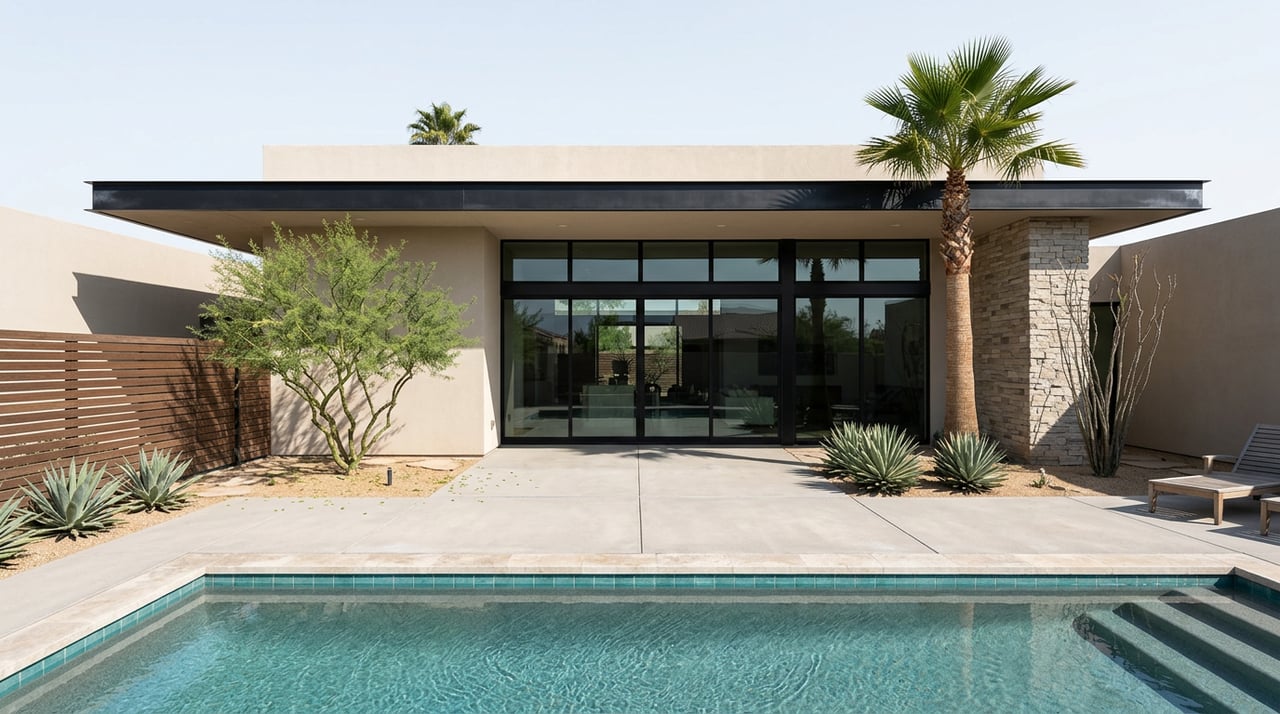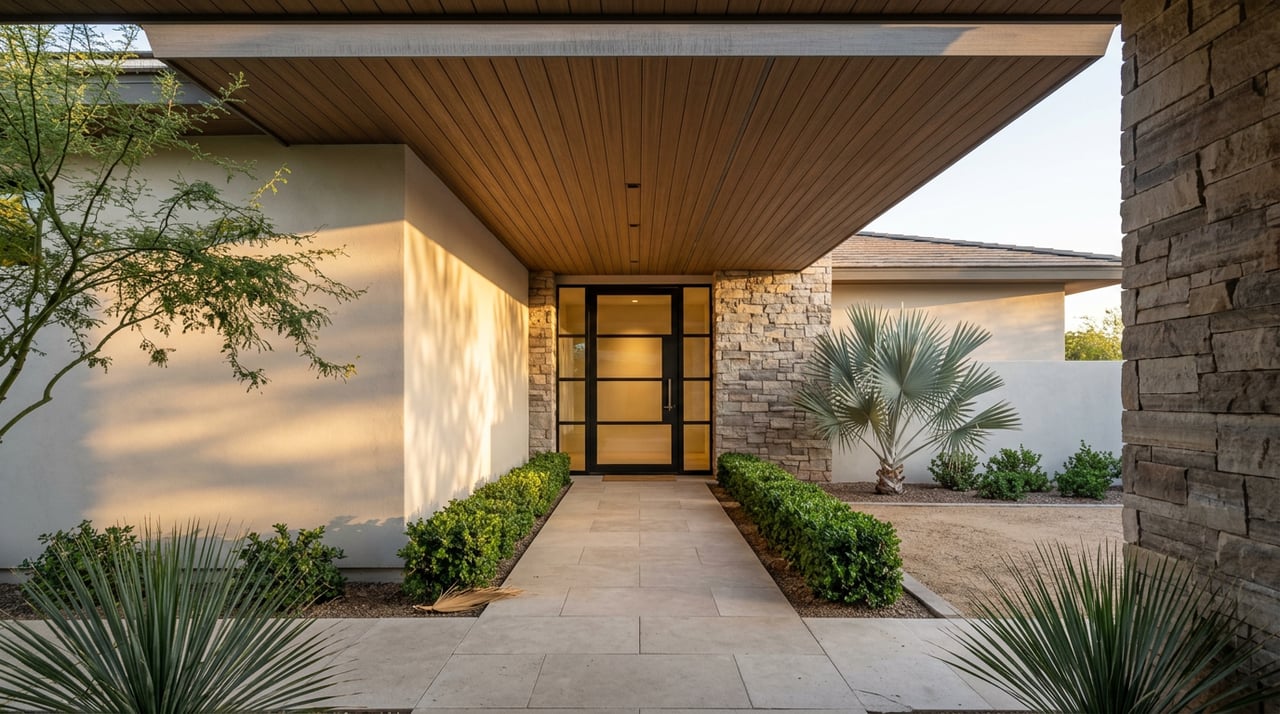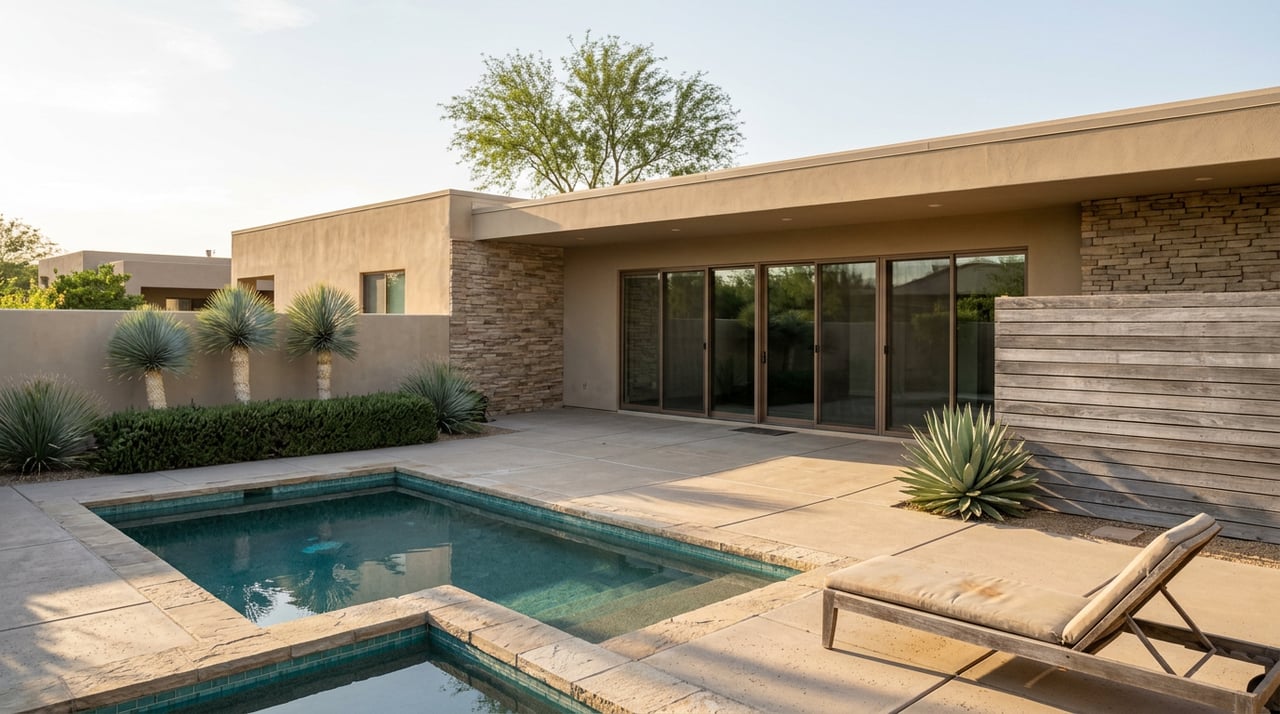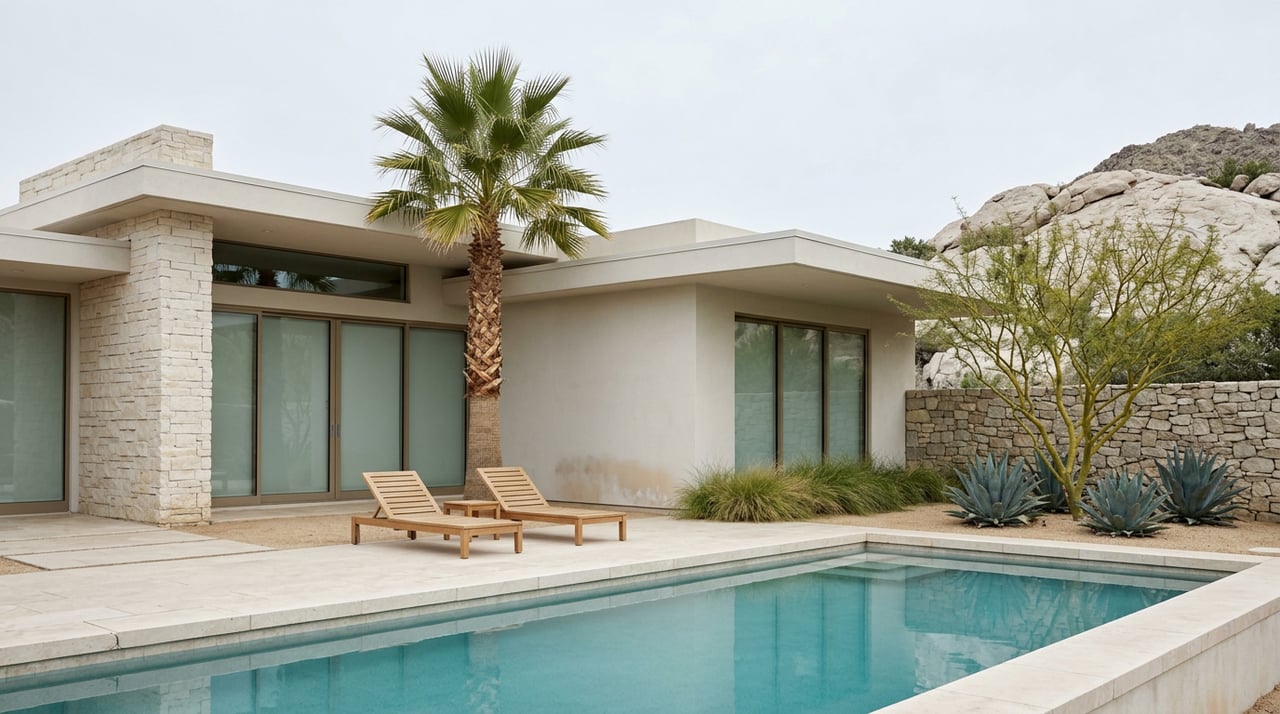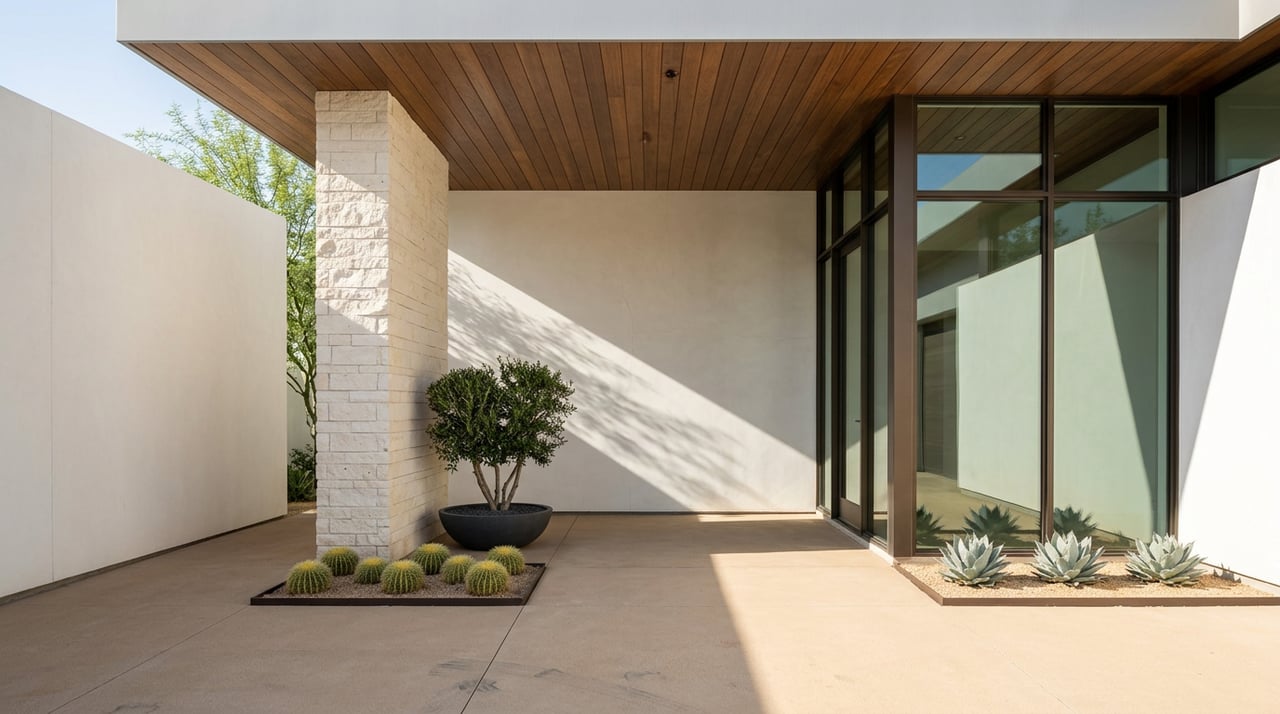
Two homes on the same street in Indian Canyons. Similar square footage, similar renovation, similar mountain view. One is listed at $1.65M. The other is at $1.25M. On the portals, the cheaper one looks like the smarter buy. In practice, it may cost more to own.
The gap almost always traces back to a single question a listing does not answer in a headline: is the land under the home fee simple, or is it leased from an Agua Caliente family? That answer sets your monthly carry, your financing options, and the shape of your exit. Everything else in this post is evidence for that claim.
Start with the land, not the list price
Indian Canyons sits inside the checkerboard the federal government drew in 1876, when alternating square-mile sections were deeded to the Pacific Railroad and to the Agua Caliente Band of Cahuilla Indians during the railroad's Los Angeles to Yuma expansion. That grant left the tribe with roughly 52,000 acres in the Coachella Valley, about 6,700 of them inside Palm Springs. The pattern is not a curiosity of history. It is why two adjacent lots in the same neighborhood can carry very different economics today.
Over 23,000 residential properties in the Coachella Valley sit on leased land, granting homeowners rights to the land for the duration of the lease. Some of the best-known enclaves in south Palm Springs contain both tenure types inside one gate, and Indian Canyons condominium tracts are among the places where a buyer can find fee and lease parcels side by side. Neighboring Andreas Hills, by contrast, is more consistently fee simple — a useful reference point when you want to isolate what the tenure itself is doing to the price.
The Bureau of Indian Affairs Palm Springs Agency holds approval authority for leasing of trust lands on the Agua Caliente Indian Reservation, and its staff is the definitive resource when a specific parcel's status is in question.
Why the cheaper listing is often the leased one
The discount is not imaginary, and it is not small. Homes on leased land typically cost 15 to 30 percent less than comparable properties on fee simple land, because buyers are purchasing only the structure, not the land beneath it. That is where the $1.25M and $1.65M gap in the opening example comes from.
There are real advantages baked into that number. At the taxation level, homeowners are typically taxed on the market value of the home, not the underlying land. For a second-home buyer trying to get into a specific view corridor or a specific architect's work, that lower entry cost can be the difference between a home they love and one they settle for.
The offset is a monthly land rent, paid to the lease administrator, that never goes away. And unlike an HOA line item, this one can be renegotiated by a landowner who is under no obligation to renew on the same terms.
The five-year rule that quietly reprices your loan
Here is the transaction friction that catches out-of-town buyers first. Lenders will not underwrite a mortgage that outlives the ground under the house.
The industry convention is that the remaining lease term must exceed the mortgage term by roughly five years. A 30-year loan wants a 35-year lease. A 15-year loan wants at least 20 years of lease left. If the numbers do not clear that bar, the buyer's financing choices contract, sometimes to a shorter amortization, sometimes to a local portfolio lender only, sometimes to cash.
That is a mechanical constraint, not a lifestyle one, and it means the same home carries different price ceilings depending on where its lease sits in the cycle. A home with 42 years remaining behaves like any other listing in the buyer pool. A home with 22 years remaining is a smaller market. When appraisers pull comps, they weight recent trades inside the same lease window, which is a large part of why "per square foot" analysis breaks down on lease parcels in Indian Canyons.
Renewal risk, in concrete numbers
The strongest argument for treating tenure as a first-order variable came out of a July 2025 investigation by KESQ's I-Team, which followed a Palm Springs community negotiating a lease renewal with an individual Agua Caliente landowner.
The community's master lease was created in 1977 and set to expire in 2042, and the landowner's proposal would have each homeowner pay an additional lease expiring 52 years out, with an immediate monthly payment increase of $450 that would then rise 20 to 30 percent every five years, on top of the $200 per month already being paid. The same proposal required a $100,000 signing fee per unit by December 31.
Compare that to a nearby community renewed under different terms. Sunshine Villas, built around the same era, renewed its lease through 2076 for a one-time fee of only $10,000, and when the new lease takes effect in 2042 the monthly rate will be $662.
Two communities, similar vintage, the same reservation, wildly different economics on renewal. That is the tail risk a Zestimate cannot price. It is also why the specific landowner, the administrator, and the years remaining are three data points that belong on every Indian Canyons offer worksheet.
Reading an Indian Canyons listing like a local
A useful pre-offer checklist for any Indian Canyons home that catches your eye:
- Land status. Fee simple, Indian lease, or a private developer lease. All three exist in Palm Springs, and a listing agent should be able to answer in one sentence.
- Lease expiration year and administrator. Most leases are administered by the BIA or a property management company, not the individual landowner, and that determines who you actually deal with at closing and on rent adjustments.
- Current land rent and escalator schedule. Ask for the last five years of billed amounts and the next scheduled adjustment.
- Renewal history. Has the master lease been extended once already? On what terms? Was there a signing fee?
- Financing pre-check. Confirm the remaining term clears your intended loan term by at least five years, or plan a shorter amortization.
- Closing timeline. Trust-land transfers require an application to the Agua Caliente Indian Reservation with a review process that runs about ten business days under standard handling, with rush processing available. Build that into your escrow calendar.
None of this makes lease land a bad buy. It makes it a different buy, one where the price on the sign is only the first of two numbers you are underwriting.
Where the math actually favors lease land
For a certain buyer, the arithmetic still works in favor of the leased parcel:
- Second-home owners on a 10 to 25 year horizon, where the discount to entry price outweighs the ground rent over that specific window.
- Buyers who want a specific architect, view, or golf frontage in Indian Canyons that is simply not available on a fee lot at their budget.
- Cash buyers who are not exposed to the five-year lender rule at all, and who can price the renewal risk directly rather than through a mortgage constraint.
For a buyer optimizing for the longest possible hold, or for maximum liquidity on exit into an uncertain future lender market, fee simple carries less to disclose and less to explain. Neither answer is universally right. The point is that the answer is not on the listing; it is in the file.
A short FAQ
Does a home on lease land appreciate more slowly than fee simple? Historical performance in the valley has been broadly comparable, with condition, architecture, and view driving most of the differential. The renewal cycle is where the divergence shows up, not the average holding period.
Can I extend a lease before I buy? Not usually as the incoming buyer. Renewals are negotiated by the master lessee, often the HOA, with the individual landowner. What you can do is buy into a community that has already renewed on published terms, which removes the largest unknown from the file.
Are property taxes really lower on lease land? Assessments generally apply to the structure rather than the land, which produces a lower base than a comparable fee-simple home. Confirm any specific parcel with the Riverside County Assessor before relying on that figure in your budget.
Is any of this a reason to avoid Indian Canyons? No. Indian Canyons remains one of the most architecturally distinctive gated golf enclaves in Palm Springs. The lesson is that the neighborhood rewards buyers who read past the sticker.
If you are weighing an Indian Canyons home and want the lease file, the renewal history, and the true monthly carry laid out side by side before you write an offer, that is the work Sarah & James Pearce do on every transaction in this pocket of Palm Springs. Reach out for a private conversation, or start with a Free Home Valuation if you already own here and want to see where your parcel sits in the current market.